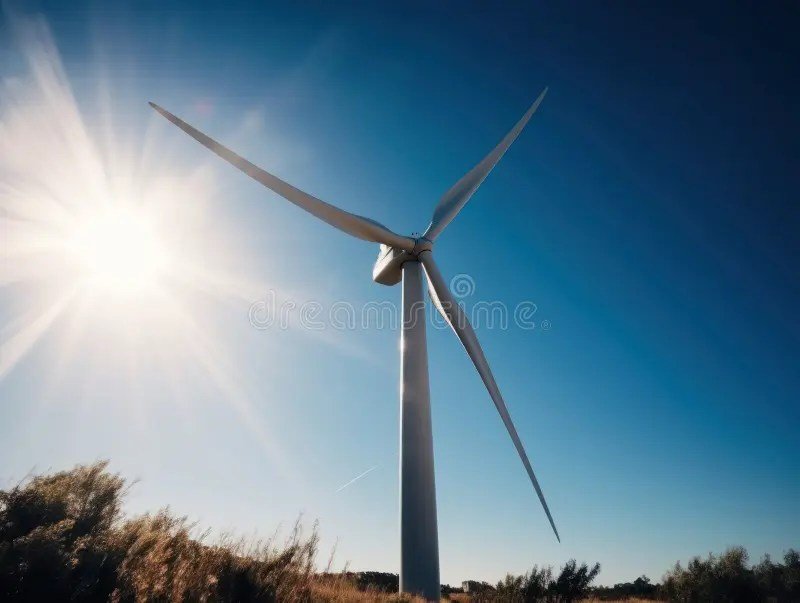
From the gentle churn of a wind farm to the immense roar of a hydroelectric dam, a fundamental truth underpins our modern electrified world: Electricity Generation via Turbines Converts Motion into Electrical Power. It’s a marvel of engineering, a dance between fluid dynamics and electromagnetism that powers everything from our smartphones to our cities. Without these sophisticated machines, we simply wouldn't have the reliable, on-demand energy that defines contemporary life.
So, how do these spinning giants actually work their magic? Let's peel back the layers and discover the elegant principles at play.
At a Glance: Understanding Electricity Generation via Turbines
- The Core Idea: Turbines capture the kinetic energy from moving fluids (like wind, water, or steam) and convert it into mechanical rotation.
- The Generator's Role: This mechanical rotation then drives an electricity generator, which uses electromagnetic induction to produce electrical energy.
- Key Components: Think blades to catch the fluid, a shaft to transfer rotation, and a generator to make electricity.
- Two Main Principles: Impulse turbines hit blades directly with a high-speed fluid jet; Reaction turbines spin as fluid flows continuously over multiple blades.
- Diverse Applications: From massive steam turbines in power plants to the familiar wind turbines dotting our landscapes, the concept adapts to many energy sources.
- Efficiency Matters: Engineers constantly refine turbine designs and systems, like combined-cycle plants, to maximize energy output and minimize waste.
The Core Mechanism: How Turbines Transform Movement into Power
At its heart, a turbine is a deceptively simple device designed to catch something moving and turn it into something spinning. Imagine a child's pinwheel catching the breeze, or a water wheel turning with a river's flow. Turbines take this basic concept and scale it up to an industrial level, harnessing vast amounts of kinetic energy from a moving fluid – be it a liquid like water, or a gas like steam or air.
This kinetic energy, once captured, is converted into mechanical energy, manifesting as the rotation of a central shaft or axle. Now, here's where the real "electricity" part comes in: this spinning shaft is connected directly to an electricity generator.
Generators work on the principle of electromagnetic induction. Picture a powerful magnet spinning rapidly inside a coil of copper wire. As the magnet moves, it creates a fluctuating magnetic field, which in turn "induces" a voltage difference across the copper wire. This voltage difference drives electrons, creating an electrical current – electricity! The faster that magnet spins, the stronger the current and the greater the power output. It’s the same basic principle that makes a bicycle dynamo light up your path, just on a much grander scale.
Every turbine system, regardless of its specific type, shares three fundamental components:
- Blades (or Buckets/Vanes): These are the critical interface, designed to efficiently catch and direct the moving fluid. Their shape and angle are meticulously engineered for optimal energy transfer.
- Shaft (or Rotor): Connected to the blades, this central axle rotates as the blades are pushed. This shaft is the conduit that carries the mechanical energy.
- Generator: The electrical workhorse, driven by the rotating shaft, transforming that mechanical motion into usable electrical power.
Impulse vs. Reaction: Two Ways to Harness Fluid Motion
While all turbines aim to spin, they employ two distinct fundamental principles to capture the fluid's energy: impulse and reaction. Understanding this difference is key to appreciating why certain turbines are used in specific applications.
Impulse Turbines: The Direct Hit
Imagine stepping into the path of a high-pressure fire hose. That direct, forceful impact is the essence of an impulse turbine. Here, a fast-moving fluid (usually water or steam) is directed through one or more narrow nozzles, creating powerful, high-velocity jets. These jets then strike a series of specially shaped blades or "buckets" on the turbine wheel.
The blades are designed to drastically change the direction of the fluid's flow, efficiently transferring momentum from the fluid to the turbine. It's a bit like a boxer delivering a powerful punch – the energy is transferred through a sharp, direct impact. Because the fluid's pressure remains largely constant as it passes over the blades, these turbines often don't require a fully enclosed casing and can even operate in the open air, like a classic water wheel, but with far greater efficiency. The Pelton wheel, commonly used in high-head hydroelectric applications, is a prime example of an impulse turbine.
Reaction Turbines: The Continuous Push
Now, picture yourself pushing a swing. Your continuous effort, not a single sharp blow, keeps it moving. That's closer to how a reaction turbine works. In this design, the turbine blades are immersed within a larger volume of moving fluid. Instead of being hit by a jet, the blades are shaped aerodynamically (or hydrodynamically) to generate lift or drag as the fluid flows past them. The fluid's pressure and velocity both change as it moves over the blades, causing a continuous "push" that spins the rotor.
Think of it like an airplane wing; the pressure difference above and below the wing creates lift. Similarly, the pressure difference across the reaction turbine blades generates torque. Wind turbines are a familiar example of reaction turbines; their propeller-like blades spin as wind flows over them. Other examples include Francis and Kaplan turbines, widely used in medium to low-head hydroelectric plants. Reaction turbines can often extract more power than impulse turbines of the same size because multiple blades are in continuous contact with the fluid, harnessing energy more consistently across a larger area.
Decoding Specific Turbine Powerhouses
The fundamental principles of impulse and reaction are applied across a dazzling array of turbine types, each tailored to a specific energy source.
Gas Turbines: The Fiery Heart of Power
Gas turbines, often called combustion turbines, are essentially internal combustion engines optimized for continuous power generation. Their process is a rapid-fire cycle:
- Compression: Air is first drawn in from the atmosphere and compressed to very high pressures by a compressor, which is often mounted on the same shaft as the turbine.
- Combustion: The compressed air then mixes with a fuel, typically natural gas, though other fuels like liquid petroleum or even hydrogen can be used. This mixture is ignited in a combustion chamber, creating extremely hot, high-pressure gases.
- Expansion & Rotation: These superheated gases rapidly expand and are directed through nozzles onto the turbine blades, causing them to spin at very high speeds.
- Power Generation & Cycle Sustenance: The rotating turbine shaft drives the electricity generator, producing power. Crucially, it also drives the compressor, ensuring a continuous supply of high-pressure air to keep the cycle going.
Gas turbines are prized for their quick startup times and ability to respond rapidly to changes in electricity demand. However, they can experience energy loss due to temperature fluctuations during combustion, impacting their overall efficiency if not optimized.
Steam Turbines: Harnessing the Force of Vapor
Steam turbines are the workhorses of large-scale electricity generation, accounting for a significant portion of the world's power supply. Their process relies on a closed loop:
- Boiler Power: Water is heated in a boiler, often using fossil fuels (coal, natural gas), nuclear fission, biomass, or concentrated solar thermal energy, to produce high-pressure, superheated steam.
- Turbine Spin: This high-pressure steam is directed into the turbine, where it expands and pushes against a series of blades, causing the turbine to spin.
- Multiple Stages: Steam turbines often incorporate multiple "stages" – a series of turbine sections with progressively larger blades. As the steam expands and loses pressure, it passes through these stages, each one extracting more energy.
- Condensation & Recycle: After passing through all the turbine stages, the steam has lost much of its energy. It's then cooled in a condenser, turning back into water. This water is then pumped back to the boiler to begin the cycle anew, minimizing water waste.
Pioneered by Charles Parsons in 1889, steam turbines typically operate at very high speeds and are incredibly efficient at converting heat energy into mechanical rotation. If you're wondering about the foundational technology behind other major power sources, you might want to Learn how nuclear generators work, as they almost universally rely on steam turbines to convert the heat from nuclear fission into electricity.
Water Turbines: The Might of Hydropower
Hydroelectric power plants harness the age-old force of falling water. The process is elegant and highly effective:
- Dam & Reservoir: A dam is constructed across a river, creating a large reservoir of water at a significant height. This height provides potential energy.
- Penstock Channel: Water from the reservoir is channeled through a large pipe called a penstock, which directs it downhill.
- Potential to Kinetic: As the water falls through this height (known as the "head"), its potential energy is converted into kinetic energy – fast-moving water.
- Turbine & Generator: This powerful stream of moving water then flows past a water turbine. The kinetic energy of the water spins the turbine blades, converting it into mechanical energy. This spinning turbine, in turn, drives an electricity generator.
Water turbines can be either impulse (like the Pelton wheel for very high heads) or reaction (like the Francis or Kaplan turbines for medium to low heads). Impulse water turbines can operate in the open, while reaction water turbines generally require an enclosed channel to maintain the pressure differential. Hydropower is a critical component of the future of renewable energy, offering a reliable, dispatchable source of clean power.
Wind Turbines: Capturing Nature's Breath
Perhaps the most iconic symbol of renewable energy, wind turbines capture the kinetic energy of wind directly. These are classic examples of reaction turbines:
- Blade Design: Large, aerodynamically shaped blades (often two or three) are designed to generate lift when wind flows over them, similar to an airplane wing.
- Wind Energy to Rotation: As wind pushes against and flows over the blades, it causes the entire rotor assembly to spin.
- Gearbox (Optional) & Generator: This rotation is often fed through a gearbox (though some modern designs are "direct-drive") to increase the rotational speed, which then drives an electricity generator.
Wind turbines vary widely in size, from small units powering individual homes to colossal offshore turbines generating megawatts of power. The intermittency of wind means that wind power often benefits from understanding energy storage solutions to ensure a consistent power supply when the wind isn't blowing.
Other Turbines: Emerging and Niche Applications
Beyond these primary types, turbines also play roles in other specialized energy generation methods:
- Tidal Turbines: Similar to wind turbines, but submerged, these capture the kinetic energy of ocean tides.
- Geothermal Turbines: In geothermal power plants, steam or superheated water from the Earth's interior is used to drive steam turbines, much like in conventional thermal plants. This exciting application is a key part of exploring the role of geothermal energy for sustainable power.
The Pursuit of Power: Maximizing Turbine Efficiency
Building a turbine is one thing; making it run as efficiently as possible is another challenge entirely. Engineers are constantly innovating to squeeze every last joule of energy out of the moving fluids.
Gas Turbine Efficiency: Tackling Temperature Swings
While powerful and responsive, gas turbines can face efficiency challenges. The combustion process involves extreme temperature variations, and some energy is inevitably lost as waste heat. To combat this, one of the most significant advancements has been the development of combined-cycle power plants.
Steam Turbine Advantages: Stable Powerhouses
Steam turbines, particularly those in large thermal power plants, generally offer very high efficiencies, often exceeding those of simple-cycle gas turbines. This is partly due to the consistent, controlled heat source (boiler) and the ability to extract energy progressively through multiple stages. They also tend to require less maintenance and can have lower equipment costs over their lifespan compared to similarly sized gas turbines. However, a key drawback is their startup time; bringing a large steam turbine online and up to full operating capacity can take hours, making them less ideal for rapid-response power generation compared to gas turbines.
Combined-Cycle Power Plants: The Synergy Solution
This is where true efficiency gains come into play. A combined-cycle power plant integrates a gas turbine with a steam turbine system. Here's the ingenious part:
- First Stage (Gas Turbine): A gas turbine operates as usual, generating electricity.
- Waste Heat Recovery: Instead of simply exhausting the hot gases from the gas turbine into the atmosphere (where their energy would be lost), these gases are directed to a heat recovery steam generator (HRSG).
- Second Stage (Steam Turbine): The HRSG uses the gas turbine's waste heat to produce steam, which then drives a separate steam turbine to generate additional electricity.
By effectively "recovering" this waste heat, combined-cycle plants can achieve overall efficiencies of 60% or even higher, significantly boosting electricity output from the same amount of fuel and reducing emissions per unit of power. This kind of sophisticated integration, alongside real-time data analysis, is crucial for optimizing our energy infrastructure. Such advanced power generation plays a crucial role in how smart grids improve power delivery by providing efficient and flexible base load or intermediate power.
The Human Element: Monitoring and Optimization
Optimal turbine power generation isn't just about the hardware; it's also about precise control and continuous monitoring. Engineers use sophisticated sensors and control systems to:
- Regulate Turbine Speed: Ensuring the generator operates at the exact frequency required for the electrical grid.
- Manage Load Demand: Adjusting power output in real-time to match the varying needs of consumers.
- Monitor Component Health: Constantly checking temperatures, vibrations, pressures, and other parameters to prevent failures and schedule proactive maintenance.
This meticulous oversight ensures consistent, reliable electricity production and extends the operational life of these incredibly complex machines. It also highlights the growing trend towards benefits of decentralized power generation as more localized and responsive systems complement large central plants.
Beyond the Blades: Common Questions & Future Outlook
Even with all this technical detail, you might still have some lingering questions. Let's tackle a few.
Are All Turbines Alike?
Absolutely not! While they all convert fluid motion into rotational energy, the specific fluid (water, steam, gas, wind) dictates vastly different designs, materials, and operating conditions. A wind turbine, for example, is optimized for low-density, variable-speed airflow, while a steam turbine handles high-pressure, high-temperature vapor. The core principle is shared, but the engineering execution is distinct for each application.
How Clean is Turbine-Generated Electricity?
The "cleanliness" of turbine-generated electricity depends entirely on the fuel source driving the turbine.
- Hydropower and Wind Turbines are considered highly clean, producing virtually no greenhouse gas emissions during operation.
- Steam Turbines are only as clean as the heat source that produces the steam. When powered by burning coal or natural gas, they contribute to emissions. When powered by nuclear, solar thermal, or geothermal energy, they are very low-emission.
- Gas Turbines directly burn fossil fuels (typically natural gas), which means they produce greenhouse gas emissions, though generally less than coal-fired plants. However, combined-cycle gas turbines significantly improve efficiency, reducing emissions per unit of electricity generated.
What's the Lifespan of a Turbine?
With proper maintenance, turbines are incredibly robust and long-lasting machines. Large hydroelectric turbines can operate for 50-100 years or more with periodic refurbishments. Gas and steam turbines typically have operational lives of 20-40 years, while wind turbines are generally designed for 20-25 years, though many are now being repowered or upgraded to extend their service. Regular monitoring and preventative maintenance are key to maximizing these lifespans.
What's Next for Turbine Technology?
The future of turbine technology is dynamic and exciting. We're seeing innovations in several areas:
- Advanced Materials: New alloys and composite materials are making blades stronger, lighter, and more resistant to extreme conditions, leading to larger, more efficient turbines.
- Smart Controls & AI: Artificial intelligence and machine learning are being integrated into turbine control systems for predictive maintenance, optimized performance, and better grid integration.
- Green Fuels: Research is accelerating into using hydrogen or sustainable biofuels in gas turbines to drastically reduce carbon emissions.
- Offshore Wind Expansion: Larger, more powerful offshore wind turbines, including floating designs, are pushing the boundaries of what's possible in renewable energy generation.
- Microturbines: Smaller, decentralized turbine units are becoming more viable for local power generation, offering resilience and efficiency at a community level.
The Unseen Powerhouse: Driving Our Electric Future
Turbines are more than just spinning machines; they are the unsung heroes of our electrical grids, the tangible link between raw energy and the power that illuminates our lives. From harnessing ancient rivers to capturing the invisible force of the wind, from igniting gas to boiling water with immense heat, these mechanical marvels perform a silent, continuous ballet of energy conversion.
Understanding how Electricity Generation via Turbines works isn't just about appreciating engineering; it's about grasping the very foundation of modern civilization. As our energy demands grow and our commitment to sustainable solutions deepens, the ingenuity behind these spinning giants will continue to evolve, driving us towards a more powerful and resilient electric future.