Nuclear reactors, often seen as enigmatic powerhouses, are in fact marvels of precision engineering, forming the very heart of a nuclear power plant. Understanding the Key Components of a Nuclear Reactor demystifies how these complex machines harness the power of the atom to generate electricity safely and reliably, turning raw atomic energy into a controlled, constant flow that powers our modern world. Far from the uncontrolled destructive force often portrayed, a reactor's true genius lies in its ability to sustain and meticulously regulate a nuclear chain reaction.
At a Glance: Inside the Reactor
- A Reactor is a Controlled Environment: It's designed to manage a nuclear chain reaction, converting atomic energy into heat.
- Core Components: Every reactor relies on nuclear fuel, a moderator to slow neutrons, control rods to regulate power, a coolant to prevent overheating, and shielding for safety.
- Safety First: Multiple layers of engineering and natural physics ensure the reaction remains stable and contained.
- Heat to Electricity: The heat generated by fission boils water, creating steam that drives turbines to produce electricity.
- Built for Purpose: Different reactor types, like Pressurized Water Reactors (PWRs) and Boiling Water Reactors (BWRs), adapt these core components to suit specific operational designs.
The Heart of Nuclear Power: What is a Reactor?
At its simplest, a nuclear reactor is a specialized device designed to initiate, sustain, and control a nuclear chain reaction. This process, known as nuclear fission, involves splitting heavy atomic nuclei—typically uranium or plutonium—which releases a tremendous amount of thermal energy. This heat is then used to boil water, producing steam that drives turbines to generate electricity, making the reactor the foundational component of a nuclear power plant. Beyond electricity generation, reactors also serve vital roles in research and the production of radioactive isotopes used in medicine and industry.
The Core Crew: Understanding the Key Components of a Nuclear Reactor
The effectiveness and safety of a nuclear reactor hinge on the seamless interaction of its primary components. Each plays a distinct yet interconnected role in controlling the immense power within.
The Reactor Vessel: A Stronghold of Power
Imagine a giant, incredibly robust pressure cooker—that's essentially the reactor vessel. This massive steel container, often many meters tall and with walls several inches thick, serves as the primary housing for the reactor's core. It's built to withstand immense pressures and high temperatures while containing the nuclear fuel, moderator, and coolant, ensuring the integrity of the nuclear process even under extreme conditions. Its structural strength is paramount, acting as the first layer of containment for the nuclear reaction.
Nuclear Fuel: The Energy Source Within
At the very core of energy production are the nuclear fuel assemblies. These are typically bundles of long, slender rods filled with ceramic pellets of enriched uranium (Uranium-235 being the fissile isotope). When a neutron strikes a Uranium-235 nucleus, it splits, releasing energy and more neutrons. This is the fission process, and these newly released neutrons can then strike other uranium nuclei, creating a chain reaction.
The amount of Uranium-235 is carefully controlled; most power reactors use uranium enriched to 3-5% U-235, which is far too low to create an atomic bomb. The fuel is meticulously designed to maximize the efficiency of this energy release while safely containing the radioactive products.
The Moderator: Taming Speedy Neutrons
Neutrons released during fission are initially very fast, sometimes too fast to efficiently cause further fission in other uranium atoms. This is where the moderator comes in. A moderator is a material placed around the fuel rods that slows down these "fast" neutrons, transforming them into "thermal" or "slow" neutrons. Slow neutrons are far more likely to be absorbed by fissile nuclei like Uranium-235, thus sustaining the chain reaction.
The most common moderator in commercial power reactors is ordinary water, but heavy water (deuterium oxide) and graphite are also used in specific reactor designs. Without a moderator, the chain reaction would quickly fizzle out in most commercial reactors.
Control Rods: The Reactor's Brake Pedal
To prevent the chain reaction from running wild, reactors employ control rods. These are typically made from materials that are excellent at absorbing neutrons, such as cadmium, boron, or hafnium. By inserting control rods further into the reactor core, more neutrons are absorbed, reducing the number available to cause fission, thereby slowing down or even stopping the chain reaction and decreasing the reactor's power output. Conversely, withdrawing the control rods allows more neutrons to cause fission, increasing the reactor's power.
These rods provide immediate and precise control over the reactor's power level, acting as the critical regulatory mechanism that keeps the reaction at a stable, controlled rate. They are also crucial for safely shutting down the reactor in an emergency.
Coolant: The Heat Carrier and Protector
The fission process generates immense heat, and this heat needs to be both managed and transported. That's the job of the coolant. Circulating through the reactor core, the coolant absorbs the heat generated by fission, preventing the fuel from overheating and melting (a critical safety concern). Once heated, the coolant then transfers this thermal energy, typically to a secondary circuit, to produce steam for electricity generation.
Water (both light and heavy) is the most common coolant. Other coolants include gases like helium or carbon dioxide, or even liquid metals such as sodium or sodium-potassium alloy (NaK). The choice of coolant impacts the reactor's design and operating characteristics. The process of extracting and transporting this heat is fundamental to how nuclear power works as a whole, transforming atomic energy into usable electricity.
Radiation Shielding: The Invisible Wall of Protection
Nuclear fission produces not only heat but also various forms of penetrating radiation, including neutrons and gamma rays, which can be harmful to living organisms. Radiation shielding is therefore a critical safety component, designed to absorb and reflect this radiation to protect personnel and the environment.
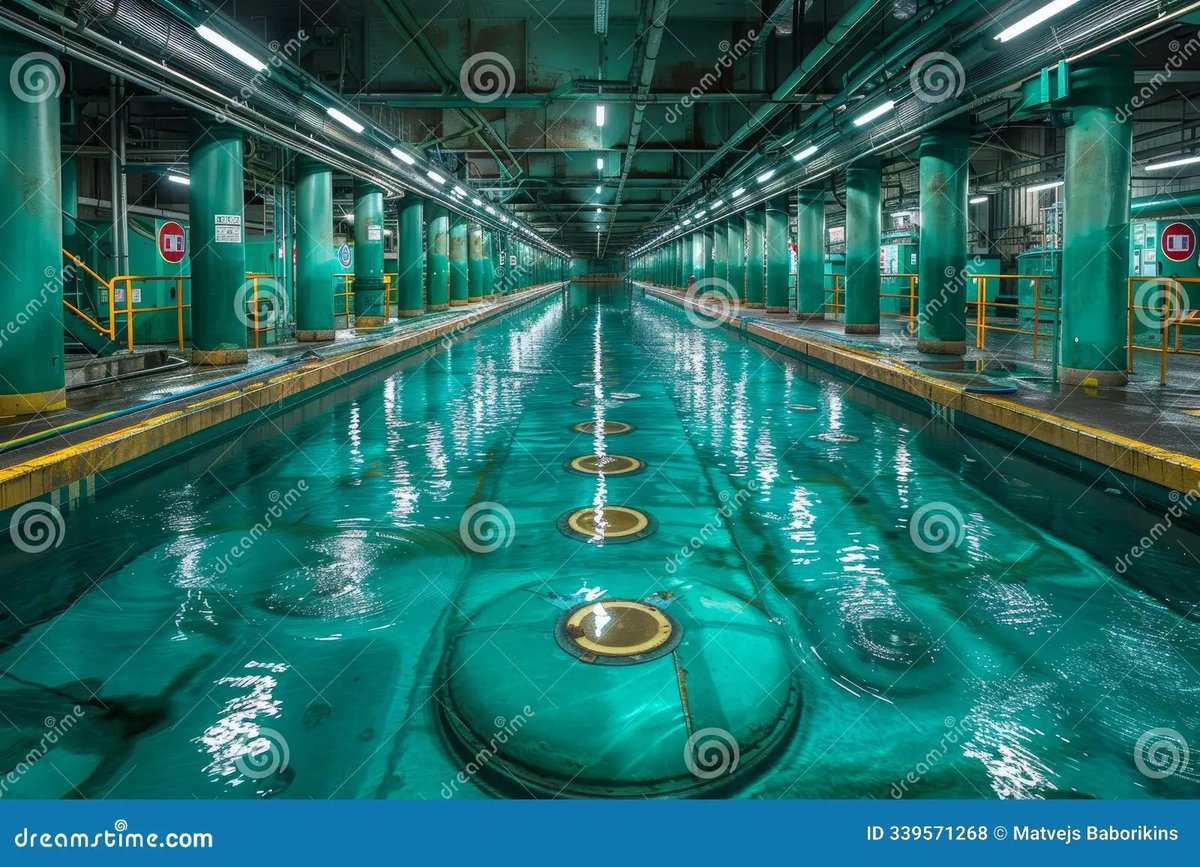
This shielding can take various forms. In some research reactors, a deep pool of water ("swimming pool" reactors) acts as a transparent shield, allowing researchers to observe the core while being protected. Commercial power reactors typically use thick layers of concrete, often impregnated with heavy metals like lead or steel, forming a robust "biological shield" around the reactor vessel. This multi-layered defense ensures that radiation levels outside the reactor core are within safe limits.
Orchestrating the Reaction: How Components Work Together
Understanding each component individually is one thing, but their true genius lies in their combined operation. The nuclear fuel starts the reaction, releasing fast neutrons. The moderator then slows these neutrons down, making them efficient at causing further fission. This controlled chain reaction generates heat, which the coolant dutifully carries away. The control rods are the maestros, constantly adjusting the neutron population to maintain a steady power output, while robust shielding ensures the entire process is safely contained. This intricate dance of physics and engineering allows for the continuous, controlled generation of energy.
Unlike an atomic bomb, where the chain reaction is designed to rapidly escalate into an uncontrolled explosion, a nuclear reactor is fundamentally different. Its design ensures a constant, stable, and self-sustaining level of fission. Safety systems and inherent physics prevent any rapid escalation, making a nuclear reactor incapable of exploding like a nuclear weapon.
Beyond the Reactor Core: Plant-Level Infrastructure
While the reactor core houses the key components of nuclear energy generation, it sits within a larger, interconnected ecosystem of buildings and systems, each playing a crucial role in the plant's overall operation, safety, and efficiency.
The Containment Building: The Ultimate Safeguard
This massive, dome-shaped concrete and steel structure is perhaps the most iconic feature of a nuclear power plant. The containment building is designed to enclose the reactor vessel and the entire primary cooling circuit (which includes primary pumps, pressurizer, and steam generators in PWRs). Its purpose is unequivocal: to act as the final barrier against the release of radioactive materials into the environment in the highly improbable event of an accident. It's built to withstand extreme internal pressures and external impacts, including earthquakes and even plane crashes.
The Turbine Building: Turning Heat into Power
Once the reactor's heat has been transferred to create steam, that steam is directed to the turbine building. This is where the magic of electricity generation truly happens. High-pressure steam spins massive turbines, which are coupled to an alternator. This alternator, effectively a giant electrical generator, converts the mechanical energy of the spinning turbine into electrical energy. The turbine building also houses steam reheaters, condensers (where steam condenses back into water), and feedwater preheaters, all essential for optimizing the steam cycle and maximizing efficiency.
The Fuel Building: Managing the Lifecycle
Nuclear fuel, both fresh and spent, requires specialized handling and storage. The fuel building is dedicated to this critical task. It securely stores new fuel assemblies awaiting their turn in the reactor and, more significantly, provides safe storage for spent fuel. Spent fuel remains highly radioactive for extended periods and is typically stored in deep pools of water within the fuel building, or in dry casks, awaiting eventual reprocessing or permanent disposal.
The Control Building: The Reactor's Brain
The control building houses the plant's central nervous system: the control room. This is where highly trained operators monitor hundreds of parameters, track performance data, oversee security systems, and issue commands to the reactor and other plant systems. From here, they can adjust control rod positions, regulate coolant flow, and manage every aspect of the plant's operation, ensuring it runs efficiently and, most importantly, safely.
The Auxiliary Building: The Support System
Supporting the complex operations of a nuclear power plant requires a host of ancillary systems, many of which are housed in the auxiliary building. This includes various security systems, radioactive waste treatment facilities (managing low and intermediate-level waste), and sophisticated air filtration and conditioning equipment to maintain appropriate environmental conditions within the plant and prevent the release of any airborne radioactive particles.
Two Approaches to Power: PWR vs. BWR
While the fundamental key components of a nuclear reactor remain consistent, their integration and operational specifics vary depending on the reactor type. The two most common designs worldwide are Pressurized Water Reactors (PWRs) and Boiling Water Reactors (BWRs).
Pressurized Water Reactors (PWRs): The Two-Loop System
PWRs are the most prevalent type globally. They use enriched uranium fuel and light water (ordinary water) as both a coolant and a moderator. The defining characteristic of a PWR is its "two-loop" or "indirect" cooling system. Water in the primary cooling circuit is kept under extremely high pressure, preventing it from boiling even at very high temperatures as it passes through the reactor core. This superheated water then flows through steam generators, where it transfers its heat to a separate, secondary water circuit. This secondary circuit operates at a lower pressure, allowing the water to boil into steam, which then drives the turbine. The two separate circuits ensure that any radioactive material remains contained within the primary loop, away from the turbine and generator.
Boiling Water Reactors (BWRs): Steam in the Core
BWRs, while also using enriched uranium and water as both coolant and moderator, employ a simpler "single-loop" or "direct" cooling system. In a BWR, the water coolant inside the reactor vessel is maintained at a lower pressure than in a PWR, allowing it to boil directly within the reactor core as it absorbs heat from the fission process. The steam generated in the reactor vessel is then sent directly to the turbine to generate electricity. This design eliminates the need for separate steam generators, simplifying the plant layout but requiring the turbine and associated components to be shielded from any potential low-level radioactivity in the steam.
The Art of Control: Ensuring Safety and Stability
The ability to control the nuclear chain reaction is the cornerstone of safe nuclear power. This control is achieved through a combination of engineering design, precise operational procedures, and inherent physical phenomena.
Controlling the Chain Reaction
The rate of a chain reaction is determined by the "neutron population" in the core.
- Subcritical State: If the neutron population decreases, the fission rate drops, and power declines. This is the desired state for shutting down a reactor.
- Critical State: The ideal operational state where the neutron population is sustained at a constant rate, leading to a steady fission rate and constant power output.
- Supercritical State: The neutron population increases, causing the fission rate and power to rise. This state is temporarily achieved during reactor start-up to bring the reactor to its desired power level, typically by slowly removing control rods.
The Role of Delayed Neutrons
One of nature's subtle yet crucial gifts to reactor control lies in "delayed neutrons." While most neutrons are emitted immediately upon fission, a tiny fraction (less than 1%) are emitted by the radioactive decay of fission products some seconds or even minutes later. These delayed neutrons are incredibly important because they slow down the reaction rate, providing operators with invaluable time—seconds instead of milliseconds—to respond to changes in reactor power. Without delayed neutrons, controlling a reactor would be far more challenging, if not impossible.
Negative-Reactivity Feedback: Built-in Safety
Modern nuclear reactors incorporate "negative-reactivity feedback" mechanisms, which are inherent physical properties that naturally help stabilize the reactor. For example, if the reactor's temperature or power increases, the coolant becomes less dense. This decreased density can lead to more neutron leakage from the core or less efficient moderation, both of which reduce reactivity and tend to slow down the chain reaction, bringing the power back down. This self-regulating characteristic acts as a powerful, automatic safety brake.
Beyond these inherent features, all nuclear power plants are equipped with extensive emergency core-cooling systems. These systems are designed to inject large volumes of coolant into the reactor core in the event of a loss-of-coolant accident, ensuring the fuel remains submerged and cooled, preventing any meltdown scenario.
The Building Blocks: Fissile and Fertile Materials
The fuel that drives nuclear reactors comes in two primary categories, working in tandem to produce energy.
Fissile Materials: The Immediate Fuel
Fissile materials are the workhorses of the reactor, as they readily undergo fission when struck by slow, low-energy neutrons. The most important fissile materials for power generation are Uranium-235 (U-235), Plutonium-239 (Pu-239), and Plutonium-241 (Pu-241). Of these, only U-235 occurs naturally in significant amounts (about 0.72% of natural uranium). Most power reactors use enriched uranium, meaning the concentration of U-235 has been increased, typically to 3-5%, to sustain a more efficient chain reaction.
Fertile Materials: The Future Fuel
Fertile materials are those that are not directly fissile but can be transformed into fissile materials through neutron capture and subsequent radioactive decay. The key examples are Uranium-238 (U-238) and Thorium-232 (Th-232).
- Uranium-238, which makes up over 99% of natural uranium, absorbs a neutron to become Neptunium-239, which then decays into Plutonium-239 – a fissile material.
- Thorium-232 similarly absorbs a neutron to become Thorium-233, which decays through Protactinium-233 to form Uranium-233 – another fissile material.
Power reactors strategically contain both fissile and fertile materials. As the reactor operates, some of the fertile material (like U-238) in the fuel rods converts into new fissile material (Pu-239). This process, known as "breeding" or "conversion," means that the reactor generates some of its own new fuel, partially replacing the fissile materials that are consumed. This extends the operating period of the reactor before refueling is necessary and allows for more efficient utilization of the uranium resource. Plutonium-240, a non-fissile isotope, also builds up in reactor fuel after long periods of operation.
Dispelling Myths: What a Reactor Isn't
It's common to hear misconceptions about nuclear reactors, often conflating them with nuclear weapons. It's crucial to understand the fundamental differences. A nuclear reactor, by design, cannot explode like an atomic bomb. The fuel used in power reactors is low-enriched uranium, meaning it doesn't have a high enough concentration of fissile material to sustain the runaway chain reaction required for a bomb. Instead, reactors are engineered for a controlled, steady release of energy, constantly monitored and regulated by their various components and safety systems. The idea of a reactor "going critical" in a catastrophic explosion like a nuclear bomb is scientifically impossible with current commercial reactor designs.
The Engineered Marvel: A Future Powered by Precision
The Key Components of a Nuclear Reactor represent a triumph of human ingenuity, blending complex physics with meticulous engineering to create a sustained, controlled, and remarkably safe energy source. From the robust reactor vessel to the intricate dance of fuel, moderator, control rods, coolant, and shielding, each part plays a vital role in harnessing the immense power of the atom.
As we navigate the complexities of global energy needs and the urgent call for decarbonization, understanding these fundamental components sheds light on why nuclear power continues to be a crucial part of our energy future. It's a technology built on precision, layers of safety, and a deep understanding of atomic forces, designed not for destruction, but for the quiet, continuous generation of power that helps sustain modern life.